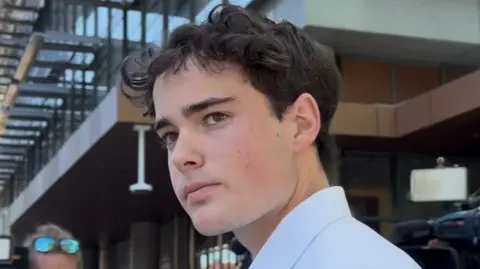
In a landmark case, William Hamish Yeates, a 19-year-old Australian, has pleaded guilty to creating deepfake pornography. This case represents a significant step in addressing digital abuse, particularly against women, and highlights the effectiveness of new national laws designed to combat such crimes.
Yeates is the first individual charged under Australia's recently enacted legislation criminalizing the manipulation of sexual images, which carries a maximum penalty of seven years in prison. He entered his plea in court on Wednesday, admitting to four offenses related to the creation and distribution of sexual content without consent.
Experts warn that deepfake pornography, often generated through artificial intelligence technology, is increasingly becoming a tool for gendered abuse and bullying, mainly targeting women and girls. Following his guilty plea, Yeates exited the courthouse without making any comments and is scheduled to return for a hearing next month.
Initially facing 20 charges, some were withdrawn by the Commonwealth Director of Public Prosecutions after Yeates admitted to charges including producing sexual material without consent and distributing it via a carriage service in a harassing manner.
The court heard that Yeates had shared images of his victim across various social media accounts without her consent. This prosecution has been identified as the first of its kind in Australia, although various states also have laws addressing deepfake material.
The eSafety Commission, Australia’s regulator for internet safety, has raised alarms about the escalating risks posed by AI-manipulated content and has fought against apps that edit images inappropriately. Recent data indicates that explicit deepfakes online have surged by as much as 550% since 2019. Notably, 98% of deepfake material consists of pornographic imagery, with a staggering 99% of such content involving women and girls.