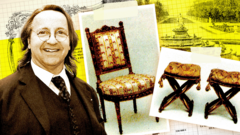
The early 2010s saw the emergence of two lavish chairs on the French antiques market, allegedly once gracing the opulent grounds of the Palace of Versailles. Coveted as the most exquisite chairs crafted for Marie Antoinette, the last reigning queen of France prior to the Revolution, these items bore the mark of Nicolas-Quinibert Foliot, a distinguished 18th-century Parisian cabinetmaker.
Declaring them “national treasures” in 2013 at Versailles' request, the French government valued the chairs highly, but when discussions with the palace on purchasing them stalled due to price disputes, they were sold to Qatari Prince Mohammed bin Hamad Al Thani for a staggering €2 million (£1.67 million). Since then, a plethora of purported 18th-century royal furniture has flooded the antiques market, much to officials’ concerns.
Other prominent pieces included chairs purportedly housed in Marie Antoinette's chamber as well as items belonging to King Louis XV’s mistress, Madame du Barry, and even Louis XVI's sister, Princess Élisabeth. Many were acquired by Versailles for exhibition, while others found new homes in elite collections. But in a stunning investigation that drew national attention in 2016, it was unveiled that these chairs were all clever fakes.
Georges "Bill" Pallot, a leading authority in antique chairs, along with accused cabinetmaker Bruno Desnoues, faced a trial after a thorough nine-year investigation revealed their counterfeit operation. Despite their esteemed reputations, they admitted to the fraud, weaving their tale through an elaborate system involving middlemen and high-end galleries, including Galerie Kraemer, which is now accused of gross negligence for selling the counterfeit items.
In court testimony, Pallot recounted that what began as a playful attempt to replicate an armchair soon spiraled into a lucrative scheme, as they produced increasingly convincing replicas. They sourced wood, aged it skillfully, and artificially crafted stamps from historical craftsmen, deceiving even modern-day experts. According to prosecutors, the duo's estimated profits soared above €3 million.
Lawyers representing Versailles detailed Pallot's intricate knowledge of the palace’s archives, which facilitated their long con. Their fraudulent efforts not only compromised the integrity of historical items but also marred the reputation of esteemed institutions like Versailles, whose trust was betrayed by those it regarded as colleagues.
The fraudulent practices were unearthed when authorities began looking into a lavish lifestyle of individuals involved in the schemes, igniting an investigation that eventually linked back to Pallot and Desnoues. As the trial progresses, it raises pressing questions regarding the need for stricter regulations in the antiques market.
As the court sessions unfold, the fate of those involved, including Galerie Kraemer, hinges on determining whether they were indeed unwitting victims or complicit in the deception. With industry standards coming into question, the fallout from this significant fraud case may reshape how antiques are authenticated in the future.
Declaring them “national treasures” in 2013 at Versailles' request, the French government valued the chairs highly, but when discussions with the palace on purchasing them stalled due to price disputes, they were sold to Qatari Prince Mohammed bin Hamad Al Thani for a staggering €2 million (£1.67 million). Since then, a plethora of purported 18th-century royal furniture has flooded the antiques market, much to officials’ concerns.
Other prominent pieces included chairs purportedly housed in Marie Antoinette's chamber as well as items belonging to King Louis XV’s mistress, Madame du Barry, and even Louis XVI's sister, Princess Élisabeth. Many were acquired by Versailles for exhibition, while others found new homes in elite collections. But in a stunning investigation that drew national attention in 2016, it was unveiled that these chairs were all clever fakes.
Georges "Bill" Pallot, a leading authority in antique chairs, along with accused cabinetmaker Bruno Desnoues, faced a trial after a thorough nine-year investigation revealed their counterfeit operation. Despite their esteemed reputations, they admitted to the fraud, weaving their tale through an elaborate system involving middlemen and high-end galleries, including Galerie Kraemer, which is now accused of gross negligence for selling the counterfeit items.
In court testimony, Pallot recounted that what began as a playful attempt to replicate an armchair soon spiraled into a lucrative scheme, as they produced increasingly convincing replicas. They sourced wood, aged it skillfully, and artificially crafted stamps from historical craftsmen, deceiving even modern-day experts. According to prosecutors, the duo's estimated profits soared above €3 million.
Lawyers representing Versailles detailed Pallot's intricate knowledge of the palace’s archives, which facilitated their long con. Their fraudulent efforts not only compromised the integrity of historical items but also marred the reputation of esteemed institutions like Versailles, whose trust was betrayed by those it regarded as colleagues.
The fraudulent practices were unearthed when authorities began looking into a lavish lifestyle of individuals involved in the schemes, igniting an investigation that eventually linked back to Pallot and Desnoues. As the trial progresses, it raises pressing questions regarding the need for stricter regulations in the antiques market.
As the court sessions unfold, the fate of those involved, including Galerie Kraemer, hinges on determining whether they were indeed unwitting victims or complicit in the deception. With industry standards coming into question, the fallout from this significant fraud case may reshape how antiques are authenticated in the future.