In brief
In a noteworthy escalation of civil unrest, Iranian protesters have targeted a local government building in the city of Fasa as demonstrations stretch into their fourth day, fueled by a significant currency collapse. Three police officers were reported injured, and four individuals were arrested during the clashes. The protests, sparked by anger over another drastic fall in the Iranian rial, have seen increased participation from students and have spread across various cities. Authorities declared a national bank holiday in an attempt to mitigate the situation, although many view this as a strategy to curb the ongoing demonstrations.
Protesters in Iran have tried to break into a local government building in the southern province of Fars, marking the fourth day of demonstrations sparked by a currency collapse.
Officials reported that three police officers were injured and four individuals were arrested in the city of Fasa.
Conflicts have also been reported in western provinces, including Hamedan and Lorestan.
In Tehran, authorities declared Wednesday a bank holiday, probably to quell the unrest.
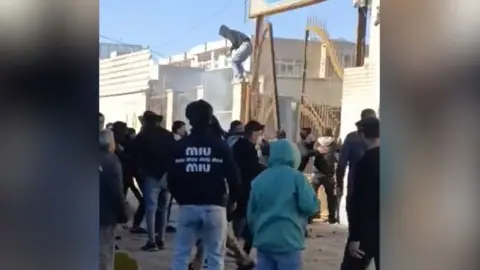
Video footage verified by the BBC shows a crowd attempting to break down the gate of the governor's office in Fasa, while other clips depict security forces firing back. Clouds of tear gas can be seen rising in front of closed shops.
In response to the protests, schools, universities, and public institutions were shut down across the country due to the unplanned public holiday announced by the Iranian government. The official reason cited was energy conservation amid cold weather; however, many Iranians perceived it as a move to suppress the protests.
The demonstrations began in Tehran on Sunday, primarily among shopkeepers upset about the significant decline in the Iranian currency against the US dollar. By Tuesday, university students joined the protests, which spread to numerous cities, with chants directed against the clerical leaders of the country.
These protests are among the most extensive since the 2022 uprising that was triggered by the death of Mahsa Amini in police custody, although the current momentum has not reached the same scale.
To preempt further escalation, security has been tightened in Tehran, particularly in regions where demonstrations initially broke out.
President Masoud Pezeshkian assured that the government would heed the legitimate demands of the protesters, but prosecutor general Mohammad Movahedi-Azad cautioned that any attempts to instigate instability would provoke a decisive response.