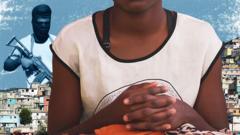
Helene was only 17 when her life took a drastic turn in Port-au-Prince, Haiti, as armed gangs overran her neighborhood. In an act of brutality, masked men abducted her and held her captive for over two months, subjecting her to repeated rapes and violent assaults. Despite their ominous demands for her to abort the pregnancy resulting from this torment, Helene courageously chose to give birth, believing her baby might be a precious gift in a life overshadowed by tragedy.
Now a 19-year-old mother, she lives in a safe house where she nurtures her baby daughter, along with at least 30 other girls and women, some as young as 12. The haven offers a stark contrast to the gang-controlled streets outside, where sexual violence has surged since the assassination of Haiti's President Jovenel Moïse in 2021.
According to Médecins Sans Frontières (MSF), reports of sexual assault have tripled in the capital, highlighting the alarming rise in multiple gang rapes during violent territorial conflicts. Diana Manilla Arroyo, MSF's head of mission, notes that an increasing number of survivors are detailing assaults involving multiple aggressors, signaling a serious escalation in the tactics of terror employed by these gangs.
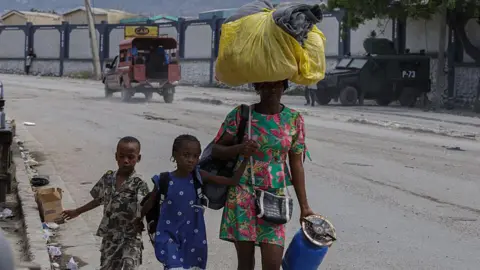
The struggle for safety extends beyond individual attacks; whole families have been devastated. Many women recount horrifying incidents where they were attacked in front of their children or witnessed the murder of their loved ones. The pervasive horror has driven more than 1.3 million residents from their homes, with half the population facing severe hunger, as unrest grips the nation.
Haiti currently lacks any elected government, with only a Transitional Presidential Council struggling to regain control. This vacuum of authority has prompted rival gangs to form alliances, exacerbating violence against civilians and making security operations increasingly tenuous.
Attempts by international forces to stabilize the situation have stalled, with gangs maintaining a tight grip over vital areas while continuing to grow their arsenal. In the streets, vigilant groups have emerged in response, but their actions do little to quell the enduring fear.
Humanitarian organizations, facing funding cuts, are deeply concerned, especially for women like Helene, who equally bear the brunt of violence and economic despair. As Helene dreams of an education and a brighter future, the path ahead remains fraught with uncertainty. "I always knew I'd have children, just not this young," she reflects, embodying not only her resilience but also the dire circumstances faced by countless others in Haiti’s ongoing crisis.