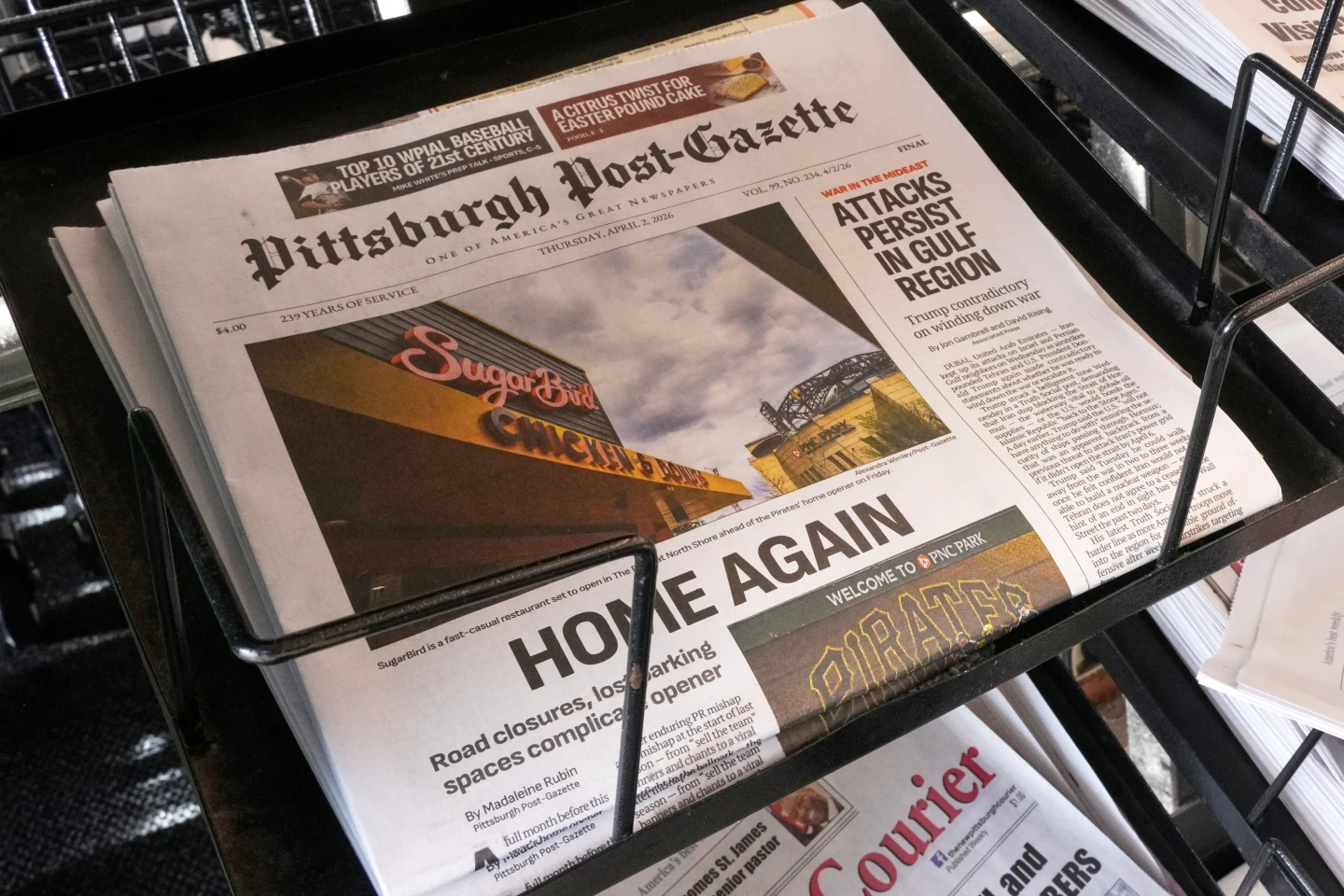
PITTSBURGH (AP) — Recent weeks have brought both turmoil and hope for Pittsburgh's media landscape, with the near-death experience of its local newspaper swiftly followed by a resurrection.
Ownership of the Pittsburgh Post-Gazette recently transitioned to a nonprofit foundation committed to keeping the historic newspaper operational. Initially slated for closure on May 3, this would have left Pittsburgh as the largest U.S. city devoid of a local daily paper.
This follows an earlier resurrection of the Pittsburgh City Paper, which had announced its closure unexpectedly on New Year's Day, only to rebound under new ownership within months.
This series of events is a rare positive in a local news industry that has largely faced decay over the past 20 years, prompting media experts to recognize the significance of such revitalizations. Investigative journalist Halle Stockton remarked, Sometimes, you have to be shaken to realize what's truly important in life.
The Legacy of the Post-Gazette
Founded in 1786, the Pittsburgh Gazette evolved over the centuries to become the Pittsburgh Post-Gazette, a name it has held for 99 years after a series of mergers. It has garnered a reputation for quality journalism, exemplified by its Pulitzer Prize-winning reporting on the Tree of Life synagogue shooting in 2019.
However, a tumultuous period marred by labor disputes hampered its operations; a significant strike occurred between 2022 and 2025, revealing deep fissures in its workforce underscored by ownership's restrictive approaches.
With Block Communications previously announcing its intent to sell the paper amid industry speculation, the potential demise of the paper shook the local community. In light of concerns for future ownership possibly leading to further stripping of journalistic resources, the recent sale to the Venetoulis Institute for Local Journalism has provided a glimmer of hope.
A Shifting Media Landscape
As the Pittsburgh Tribune-Review prepares to reinstate a Sunday edition, signaling further expansion in local journalism, efforts are also underway at Public Source to hold town halls aimed at gathering community input regarding local news needs.
While students in a local journalism class illustrate an emerging trend of diminished engagement with traditional newspapers, with many opting for social media platforms for news, industry experts stress the importance of collaboration rather than competition among local news organizations moving forward.
The future of Pittsburgh's investigative journalism heavily depends on community involvement and trust, which are crucial in creating an informed citizenry. Experts like Tim Franklin suggest that how deeply these nonprofit-led initiatives resonate with local citizens could set a precedent for similar movements nationwide.
Amidst the uncertainty, the evolving landscape poses both challenges and exciting opportunities for Pittsburgh's journalists, many of whom are now reimagining their roles in serving the public good.