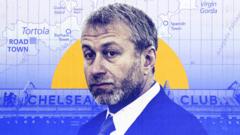
The leaked documents indicate that Abramovich's $6 billion investments, funneled through British Virgin Islands (BVI) companies, should have been taxed in the UK, as they were managed there. His attorneys retain that he has always followed expert tax advice and denies personal responsibility for any unpaid taxes.
Among the accused is Eugene Shvidler, a former Chelsea FC director who reportedly played a central role in managing these investments while residing in the UK. Claims from tax experts highlight that Shvidler’s involvement suggests that Abramovich's profits should be taxable in the UK, leading to a potential unpaid tax bill of up to £1 billion.
Shvidler’s lawyers contest this assertion, stating that reporting based on "confidential business documents" offers an incomplete narrative. Meanwhile, the implications of this investigation could be severe for Abramovich, particularly after the £2.5 billion from the sale of Chelsea FC remains frozen, pending a resolution on its use.
Tax experts estimate that HM Revenue and Customs could demand significant funds depending on the potential penalties related to the unpaid taxes. The ongoing investigation is set against a backdrop of growing scrutiny of oligarchs linked to Russia, notably post-2022 amidst geopolitical upheaval.
As the inquiry unfolds, both the British taxpayers and Ukrainian war victims await outcomes from a situation that interconnects high finance, sports, and international sanctions.
In conclusion, as previous dealings come under fire, the future of Abramovich's legacy, his financial responsibilities, and the ramifications for sports investments remain in critical focus.
Among the accused is Eugene Shvidler, a former Chelsea FC director who reportedly played a central role in managing these investments while residing in the UK. Claims from tax experts highlight that Shvidler’s involvement suggests that Abramovich's profits should be taxable in the UK, leading to a potential unpaid tax bill of up to £1 billion.
Shvidler’s lawyers contest this assertion, stating that reporting based on "confidential business documents" offers an incomplete narrative. Meanwhile, the implications of this investigation could be severe for Abramovich, particularly after the £2.5 billion from the sale of Chelsea FC remains frozen, pending a resolution on its use.
Tax experts estimate that HM Revenue and Customs could demand significant funds depending on the potential penalties related to the unpaid taxes. The ongoing investigation is set against a backdrop of growing scrutiny of oligarchs linked to Russia, notably post-2022 amidst geopolitical upheaval.
As the inquiry unfolds, both the British taxpayers and Ukrainian war victims await outcomes from a situation that interconnects high finance, sports, and international sanctions.
In conclusion, as previous dealings come under fire, the future of Abramovich's legacy, his financial responsibilities, and the ramifications for sports investments remain in critical focus.