UK Government Unveils Ambitious Plan to Phase Out Animal Testing
The government has detailed for the first time how it aims to fulfil its manifesto pledge to work toward phasing out animal testing.
The new plans include replacing animal testing for some major safety tests by the end of this year and cutting the use of dogs and non-human primates in tests for human medicines by at least 35% by 2030.
The Labour Party said in its manifesto that it would partner with scientists, industry, and civil society as we work towards the phasing out of animal testing.
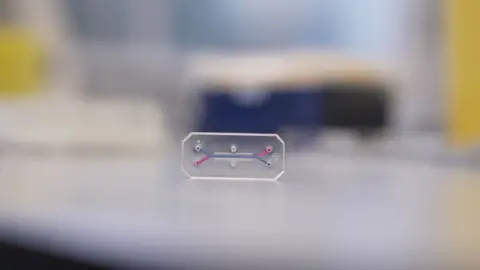
Science Minister Lord Vallance envisions a day where the use of animals in science is considerably reduced but recognizes the journey ahead will be long. He expresses optimism about using animal tissues grown from stem cells and advanced technology such as AI and computer simulations as alternatives.
Animal experiments peaked at 4.14 million in the UK in 2015 but dropped sharply by 2020 with alternative methods emerging. However, that decline has plateaued in recent years. Government plans indicate a renewed commitment to further decreasing the use of animals in research.
The new strategy involves eliminating certain safety tests involving animals, such as the pyrogen test on rabbits, in favor of using human immune cells. From 2026 to 2035, the government will accelerate the adoption of alternative methods, bolstered by funds aimed at developing new technologies and training for researchers.
Despite the positive steps, some scientists have expressed caution, fearing that rapid moves away from animal testing could compromise the advancement of medical science.
We just can't mimic complex organisms in a petri dish. While alternatives are essential, we must ensure they're reliable and effective, warns Prof Robin Lovell-Badge. Meanwhile, the RSPCA has welcomed the strategy as a significant step forward but insists that the government must deliver on its promises.
With a shift towards non-animal methodologies, the UK government aims to balance ethical responsibilities with the demands of scientific inquiry and patient safety.