In brief
In June 2026 a new Memorandum of Understanding (MoU) between the United States and Iran settles a war that began in February. The agreement is framed as a preliminary step for talks and deals with nuclear, ballistic missile, sanctions and maritime issues, but it diverges markedly from the 2015 Joint Comprehensive Plan of Action. While the JCPOA limited Iran’s nuclear stockpile and required IAEA oversight, the MoU offers only broad commitments and no concrete disarmament schedule, leaving many details to future negotiation. In addition, the MoU restores sanctions relief and allows the free flow of Iranian oil and other goods, a significant shift from the prewar sanctions regime, and it proposes a 60‑day window for safe passage in the Strait of Hormuz before a new maritime framework is negotiated. The deal’s opacity has sparked criticism that it may enable Iran to leverage shipping fees and avoid oversight of its missile and nuclear activities.
In June 2026, President Trump signed a Memorandum of Understanding with Iran that formally ends the hostilities that erupted in February. The MoU is a framework for six weeks of negotiations and is not a full‑scale agreement.
Weapons
The deal requires Iran to reaffirm that it will not develop or acquire nuclear weapons, echoing language from the JCPOA. It does not set a detailed schedule for dismantling the 440 kg of enriched uranium that Iran held at the outbreak of the war or for the destruction of its stockpile. The MoU mentions a “mechanism” for resolving the status of stored material, but offers no concrete action plan.
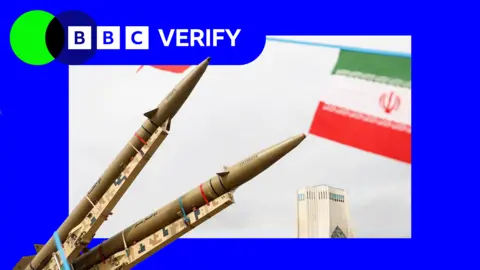
Ballistic missile activity is also absent from the text, despite President Trump’s statements that Iran would lose the capacity to produce new missiles. The MoU therefore offers only vague commitments, with no enforcement or verification measures.
Money
Unlike the 2015 JCPOA, which did not involve direct US payments but lifted sanctions that allowed Iran access to frozen assets, the new MoU announces a complete termination of sanctions in a phased schedule. Immediately after signing, waivers will let Iranian oil and related financial services operate without restrictions. The deal also promises at least $300 bn in funding for Iran’s reconstruction, a figure that marks a significant reversal of the prewar economic regime.
Ships
Prior to the conflict, the Strait of Hormuz saw about 94 merchant ships per day; the war dropped that to just six on average. The MoU pledges that the US will end its naval blockade within 30 days, allowing free passage for 60 days, and that Iran will negotiate a future maritime framework with Oman. The treaty does not prohibit Iran from charging shipping fees, a change that could increase its economic influence in the region.
The agreement’s brevity and lack of enforceable terms mean it is less detailed than the JCPOA, leaving many questions about how it will be implemented are still to be answered.