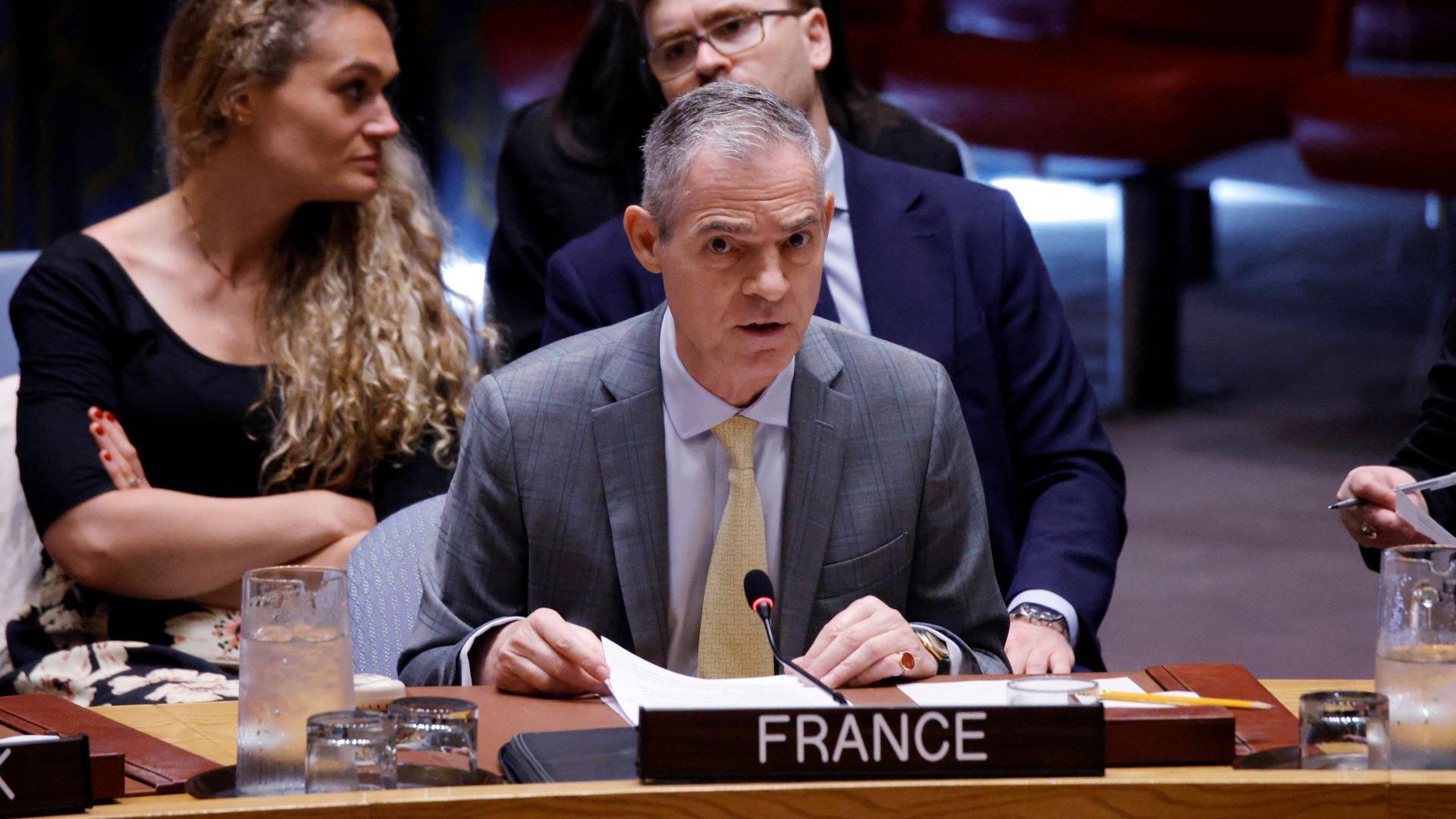
On Monday, the United States delegation walked out of an emergency UN Security Council meeting in New York, protesting France’s remarks that likened Washington’s human‑rights voting to authoritarian states.
The row began last week when the U.S. joined North Korea and Russia in voting against extending Volker Turk’s term as UN High Commissioner for Human Rights. After the vote, France’s UN mission posted on X that “the U.S. used to be a beacon of human rights. Not anymore,” accusing Washington of echoing the rhetoric of Germany, Russia and North Korea.
US ambassador Mike Waltz dismissed the criticism, claiming that France was “cozying up to the world's worst oppressors.”
The walkout happened while French Ambassador Jérôme Bonnafont was speaking on the Senate floor during an emergency session on Russia’s war in Ukraine. Ambassador Dan Negrea announced that the U.S. would continue protests until France reneged on its “condescending and disrespectful rhetoric.”
The vote on Turk’s second term (144 in favour, 10 against and 13 abstentions) highlighted a widening rift between Washington and the United Nations, a rift that deepened after the Trump administration pulled funding for UN agencies. Jeff Bartos warned that “there will be consequences” for the UN’s permitting overreach.
French diplomats continue to defend the High Commissioner as a “voice of conscience,” while the U.N. expects all member states to respect the walkout decision. The incident underscores the growing complexity of U.S.–U.N. relations and the broader geopolitical tensions surrounding Russia’s conflict in Ukraine.