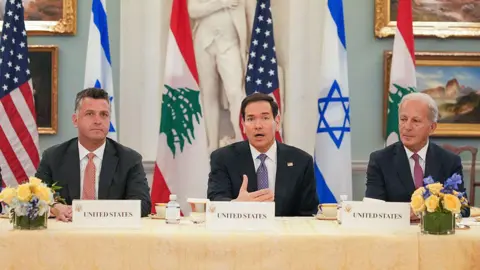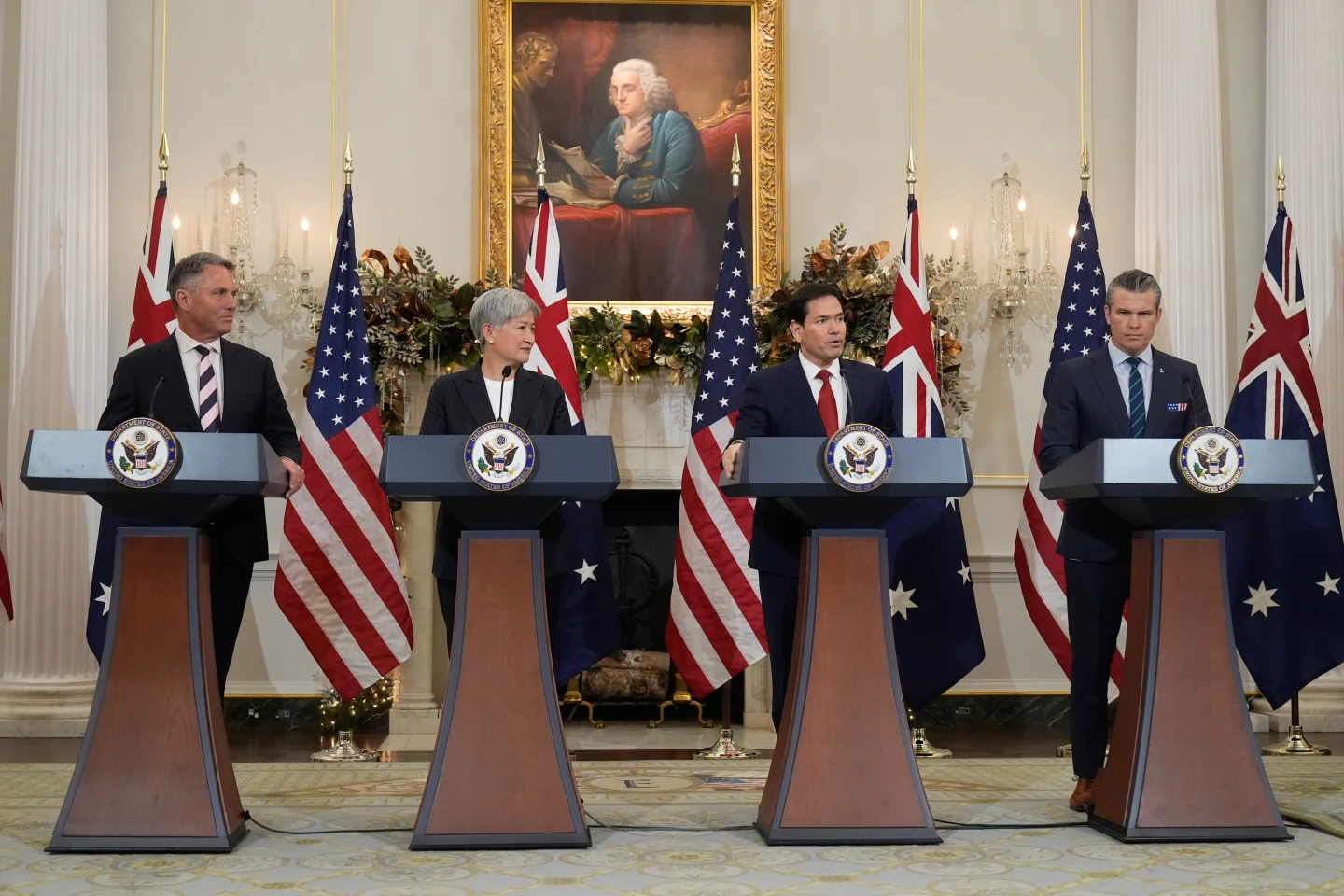
In Washington, U.S. Secretary of State Marco Rubio and Defense Secretary Pete Hegseth convened with Australian Foreign Minister Penny Wong and Defense Minister Richard Marles to discuss pivotal Indo-Pacific security concerns. The talks are predominantly centered on countering China's assertive policies in the region, particularly regarding the South China Sea and the tensions surrounding Taiwan.
Rubio emphasized the significance of the U.S.-Australia alliance, stating, This is a very strong partnership, it’s a strong alliance, and what we want to do is continue to build on it. He highlighted ongoing cooperation between the two nations in critical minerals and defense production.
While the discussions have heightened scrutiny of Beijing's influence, none of the officials directly addressed China in their initial remarks. The meeting also considered broader geopolitical issues, including the ongoing conflict in Ukraine and recent military actions by the U.S. against alleged drug traffickers.
Rubio noted the necessity for reliable and diverse supply chains for critical minerals, stressing their importance for both countries' technological advancements and defenses. This point ties into the AUKUS pact, an agreement that commits the U.S., U.K., and Australia to strengthen military collaboration, including the creation of a fleet of submarines powered by U.S. nuclear technology.
Wong reaffirmed the importance of AUKUS in ensuring the prosperity and security of all involved nations. Similarly, Marles reinforced Australia's commitment to working closely with the U.S., stating, We are living in a much more contested world and underlining the necessity of strong alliances.
As tensions in the Indo-Pacific region rise, this high-level meeting signifies a strong commitment by the U.S. and Australia to collaborate on security matters and combat challenges posed by global adversaries.