
In brief
Reports reveal harrowing accounts of hunger-fueled injuries and deaths during aid attempts.
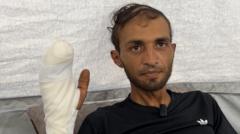
In the midst of escalating hunger crisis in Gaza, civilians are putting their lives on the line to secure basic food supplies. Mohammed al-Qedra, a 33-year-old patient at a field hospital run by the British charity UK-Med, shared his harrowing experience of being shot while attempting to collect food for his family from a Gaza Humanitarian Foundation (GHF) distribution center. With injuries to his hand and leg, he recounted his desperate journey to seek food, knowing full well the risks involved. “The famine is bad for me and for everyone,” he said, emphasizing the grave necessity of his quest for sustenance over the fear of violence.The reality in Gaza has become increasingly dire, with reports from the UN human rights office indicating that over 1,000 Palestinians have lost their lives while seeking food aid amidst the ongoing conflict. Of those, at least 766 died near one of GHF's distribution sites, which operate in areas under Israeli military control. This has sparked accusations from Israel, which claims that the chaos surrounding these sites is instigated by Hamas, stating that its forces only fire warning shots and do not intentionally target civilians.British paramedics at the UK-Med hospital are experiencing a surge in patients, with hundreds arriving monthly due to injuries incurred while attempting to access these vital supplies. The traumatic condition of patients stresses the urgency of the situation, with medical staff recounting severe injuries from gunfire and explosions. Dr. Aseel Horabi, a Palestinian medic, lamented the perilous conditions facing both healthcare workers and individuals trying to collect aid, highlighting both the physical injuries and psychological trauma of those affected.The World Health Organization (WHO) has raised alarms about the severe humanitarian crisis, describing the widespread starvation as a man-made phenomenon caused by ongoing blockades and violence. Recent statements from WHO officials paint a stark picture of the crisis, asserting that families are compelled to endanger themselves in a desperate fight for survival.This increasing desperation has led over 100 international organizations to accuse Israel of imposing a siege on Gaza, exacerbating the already critical food shortages. As conditions deteriorate, the plight of the Gazan people becomes a focus for global concern, with pleas for assistance growing louder. In the wake of these revelations, the debate around the responsibility for the humanitarian crisis continues, with Israel defending its actions by attributing the situation to Hamas mismanagement.With hunger becoming an ever-watchful adversary, Gazans remain trapped in a cycle of violence and deprivation, highlighting the urgent need for intervention and support in a conflict that seems to know no end.