In brief
Following U.S. strikes on Iranian nuclear sites, Israeli intelligence indicates that some enriched uranium remains retrievable. While the U.S. claims significant damage, assessments vary on the extent of destruction.
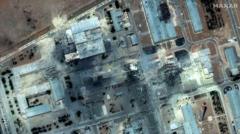
In a recent statement, an unnamed senior Israeli official raised concerns that enriched uranium could still be recovered from Isfahan, one of three Iranian nuclear facilities assaulted by U.S. military forces. The operation, dubbed "Operation Midnight Hammer," took place on June 22. The official informed U.S. reporters that accessing the uranium buried at the site would be a challenging task and could provoke further Israeli airstrikes.Former President Donald Trump has consistently asserted that the U.S. strikes effectively "obliterated" Iran's nuclear capabilities, a claim that, while echoed by some, isn't entirely backed by various U.S. intelligence agencies who have taken a more measured stance. Iran, for its part, maintains that its uranium enrichment is for peaceful purposes and vehemently denies aspirations for developing nuclear arms.During a briefing, the Israeli official indicated that intelligence suggests significant quantities of Iran's enriched uranium were buried beneath Isfahan, which was struck by cruise missiles. Despite this, the official seemed unfazed by the potential for Iran to recover the materials, confident that any such attempts would be detected promptly.U.S. assessments regarding the success of Operation Midnight Hammer have varied, with some documents suggesting that while the sites at Fordo, Natanz, and Isfahan suffered extensive damage, they were not entirely destroyed. CIA Director John Ratcliffe previously shared with lawmakers that the U.S. successfully targeted Iran’s sole facility for producing metallic uranium, crucial for nuclear weapon construction.Rafael Grossi, the head of the International Atomic Energy Agency, echoed the sentiment that while substantial damage was inflicted, remnants of the facilities remain intact, stating, "one cannot claim that everything has disappeared, and there is nothing there." Adding to that perspective, Iranian President Mahmoud Pezeshkian mentioned in a recent interview that the sites are "severely damaged," but access to them is currently unattainable, complicating efforts for a full evaluation of the situation.