In a significant display of unity, Greeks took to the streets in their largest protests in years, marking the second anniversary of the tragic train disaster that claimed 57 lives and left many others injured. The demonstrations encompassed a general strike, showcasing a groundswell of public sentiment against the government’s handling of rail safety issues.
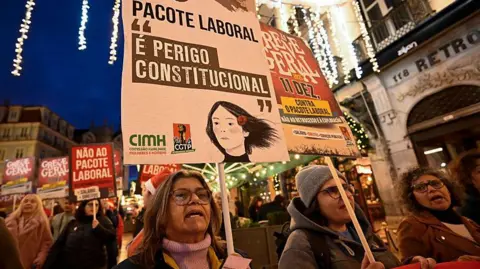
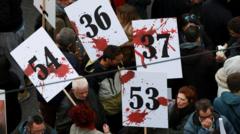
Holding placards splashed with numbers signifying the deceased, demonstrators gathered notably at Syntagma Square in Athens, where 13-year-old Dimitris stood alongside his father Petros Polyzos, both urging justice for the victims. "I am here in memory of the people who were killed in the train crash. We demand justice," Dimitris passionately declared.
The fatal incident occurred on February 28, 2023, when a passenger train packed with students collided head-on with a freight train near Greece's Tempi gorge. A recent inquiry attributed the disaster to human error, insufficient maintenance, and inadequate staffing. Christos Papadimitriou, chief of Greece's Air and Rail Accident Investigation Authority, warned that safety shortcomings revealed by the crash still remain unaddressed, stating, "Those children were killed because the train was not safe."
The Tempi disaster has fueled public outrage, with many citizens accusing the conservative government of inadequately investigating the incident and attempting to conceal the involvement of high-ranking officials. The demonstrations swelled in size and emotion as crowds of all ages converged, some participating in protests for the first time.
As tensions escalated, clashes erupted between protestors and police. Reports of petrol bombs being hurled led to police deploying tear gas to control the situation. Demonstrators expressed their deep sorrow and urgency, with some donning shirts emblazoned with messages like "I have no oxygen - justice to the end," emphasizing their quest for accountability.
Solidarity rallies sprouted in 346 cities across Greece and internationally, including major European cities such as Brussels and London, further underscoring the widespread discontent surrounding the government's response. While protesters waved placards with heartfelt messages like "My child, call me up when you arrive," there were also demands for transparency, including calls for the release of all evidence regarding the crash.
Relatives of the victims have speculated that the freight train may have been involved in smuggling operations, adding layers of suspicion to the disaster. Critics have voiced concerns about evidence possibly being compromised, suggesting that the crash site was manipulated to hide critical information.
Currently, the Greek Prime Minister Kyriakos Mitsotakis, facing his most challenging political moment after nearly six years in office, acknowledged the need for reform. He pledged to expedite efforts to modernize the railway system and prevent such tragedies in the future, though many citizens remain skeptical of the government’s promises and actions.
As protesters like Pavlos Aslanidis, who lost his 26-year-old son in the accident, continue to call for justice, the atmosphere remains charged with a mix of grief, anger, and a unifying call for change to ensure safety and accountability in Greece's railway systems.