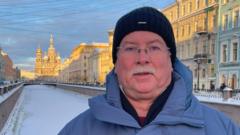
A British businessman, David Crisp, has been exposed for illegally selling high-end perfume to Russia, violating UK sanctions put in place after the country's invasion of Ukraine. An undercover investigation captured Crisp admitting to an investigator, posing as a potential buyer, that he "ignored government edicts" regarding sanctions, selling the luxury “Boadicea the Victorious” perfume priced at £1,000 a bottle in Russia.
The investigation by HM Revenue and Customs (HMRC) began after Crisp was reported by his business partner, David Garofalo, who had paused trading with Russia following the sanctions. Despite collecting substantial evidence that Crisp concealed around £1.7 million of unauthorized sales, HMRC decided to drop the investigation earlier this year.
In a video that has now come to light via the BBC, Crisp was seen discussing his ongoing sales to Russia, with the private investigator prompting him to reveal the status of his operations. Crisp's comments suggest a blatant disregard of the sanctions outlined by the UK government, which specifically prohibit any trade in several sectors, including perfumes.
Garofalo informed the authorities after discovering that Crisp was misleading partners and auditors about his continued business operations in Moscow. He even hired private investigators when concerns were raised by a whistleblower regarding Crisp's activities. Following this, a High Court judge ruled in July that the evidence amassed against Crisp was compelling enough to warrant his immediate removal from the company, deeming him a risk.
Crisp has since denied any wrongdoing, claiming that he was not aware of any breach of sanctions. “I strongly refute the allegations made against me by Mr. Garofalo,” he stated. HMRC arrested Crisp in October 2023 but later returned his passport after discontinuing their investigation.
The lack of criminal convictions for sanction violations since the onset of Russia's aggression in Ukraine has raised alarms among lawmakers. Sir Iain Duncan Smith has commented on the UK’s lax enforcement of sanctions, expressing concerns that without prosecutions, there are no deterrents for others considering similar violations. This reflects a broader criticism that the UK has not effectively upheld its sanctions regime, especially in contrast to other nations like the United States.
Experts have warned that the current approach not only diminishes the seriousness of the sanctions but also may embolden others looking to profit from trading despite explicit government prohibitions. The situation raises questions about the integrity of the UK's sanctions framework and whether sufficient penalties will be enacted in the future to ensure compliance.