Poland's Prime Minister Donald Tusk is gearing up for a crucial vote of confidence in his pro-European Union administration after his political faction narrowly lost the recent presidential election. Scheduled for Wednesday, this vote is expected to be a straightforward process given Tusk's coalition holds a 12-seat majority in the Sejm, Poland's lower house of parliament, where a simple majority of present members is sufficient to prevail.
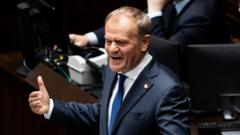
In his address to parliament, Tusk emphasized the need for his government to confront the heightened challenges posed by the election of Karol Nawrocki, the candidate supported by the opposition Law and Justice (PiS) party. Nawrocki's presidency is particularly significant as he has the power to veto legislation, echoing the tactics employed by the former conservative president, Andrzej Duda, during Tusk's first 18 months in office.
Despite lacking the necessary parliamentary support to overturn a presidential veto, Tusk seeks a reaffirmation that reinforces his government's position, at least temporarily. He indicated that a cabinet reshuffle is also on the agenda for July and expressed his belief in their mandate to govern, citing the need for complete responsibility during a difficult upcoming period.
Referencing the recent struggles of Polish tennis star Iga Swiatek at the French Open, Tusk quoted, "Victory belongs to the most tenacious," a remark likely aimed at bolstering the resilience of his coalition in the face of adversity. However, Tusk's critics in parliament may argue that, like Swiatek, he could face obstacles in retaining influence.
Under Tusk's leadership, he claims that significant progress has been made in areas identified by the PiS, such as increased defense spending and stringent migration policies. He referred to the recently signed treaty with France, underscoring Poland's commitment to mutual defense.
His speech culminated in a standing ovation from his supporters, yet notable issues regarding his left-wing coalition partner remained unaddressed. Key campaign promises, including legalizing abortion up to the 12th week of pregnancy, seem stalled due to opposition from conservative members and anticipated vetoes from President Duda. Tusk's administration has also struggled to make strides on judicial independence, a pivotal point that has led to legal disputes with the European Commission.
As Tusk contemplates the challenges ahead, he recognizes that President-elect Nawrocki's veto power is likely to impede his administration's reforms and legislative agenda.
In his address to parliament, Tusk emphasized the need for his government to confront the heightened challenges posed by the election of Karol Nawrocki, the candidate supported by the opposition Law and Justice (PiS) party. Nawrocki's presidency is particularly significant as he has the power to veto legislation, echoing the tactics employed by the former conservative president, Andrzej Duda, during Tusk's first 18 months in office.
Despite lacking the necessary parliamentary support to overturn a presidential veto, Tusk seeks a reaffirmation that reinforces his government's position, at least temporarily. He indicated that a cabinet reshuffle is also on the agenda for July and expressed his belief in their mandate to govern, citing the need for complete responsibility during a difficult upcoming period.
Referencing the recent struggles of Polish tennis star Iga Swiatek at the French Open, Tusk quoted, "Victory belongs to the most tenacious," a remark likely aimed at bolstering the resilience of his coalition in the face of adversity. However, Tusk's critics in parliament may argue that, like Swiatek, he could face obstacles in retaining influence.
Under Tusk's leadership, he claims that significant progress has been made in areas identified by the PiS, such as increased defense spending and stringent migration policies. He referred to the recently signed treaty with France, underscoring Poland's commitment to mutual defense.
His speech culminated in a standing ovation from his supporters, yet notable issues regarding his left-wing coalition partner remained unaddressed. Key campaign promises, including legalizing abortion up to the 12th week of pregnancy, seem stalled due to opposition from conservative members and anticipated vetoes from President Duda. Tusk's administration has also struggled to make strides on judicial independence, a pivotal point that has led to legal disputes with the European Commission.
As Tusk contemplates the challenges ahead, he recognizes that President-elect Nawrocki's veto power is likely to impede his administration's reforms and legislative agenda.